What are the most common mountain names?
Short answer
In the US it's a tie: Round Mountain and Bald Mountain each name 298 summits in the USGS Geographic Names Information System, with Black Mountain third at 265. Worldwide, OpenStreetMap's most repeated English summit names are the same three: Round Mountain (349), Black Mountain (326) and Bald Mountain (321). They repeat because early mapmakers named what they saw: a shape, a color, a treeless top.
 Standing in front of one now? Mountain Identifier: Peaks labels the peaks in your camera view →
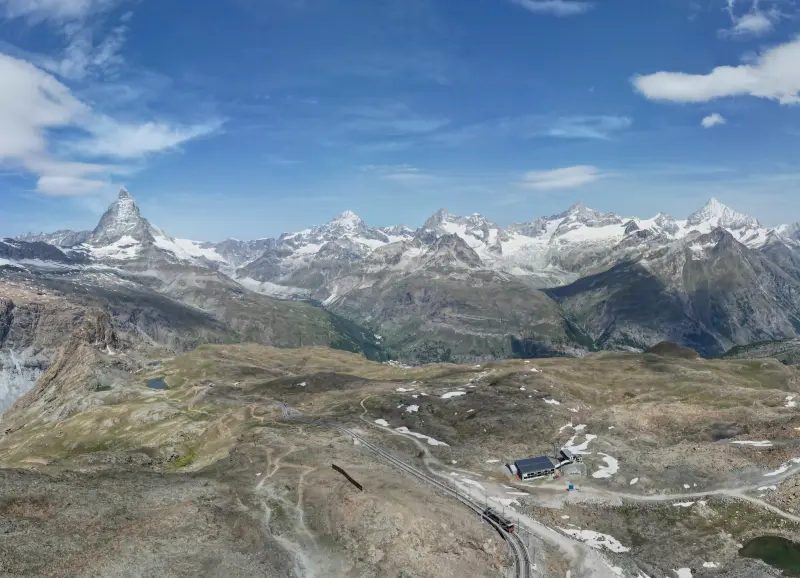
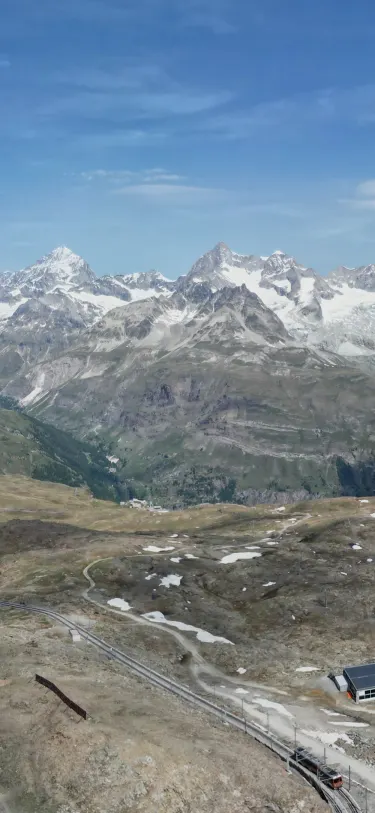 Dent Blanche4,358 m · 14.5 kmOber Gabelhorn4,073 m · 10.9 km9:41Dent Blanche4,358 m · 14.5 km away

The short list, from the official US count
The US government keeps one official list of place names: the Geographic Names Information System (GNIS), run by the USGS for the Board on Geographic Names. We downloaded its national file (dated November 2, 2026) and counted the 69,712 features classed as summits, a class that covers mountains, hills, knobs and buttes alike. These are the names used most often, exact spelling only:
| Name | US summits | Most in |
|---|---|---|
| Round Mountain | 298 | Arkansas (42) |
| Bald Mountain | 298 | California (52) |
| Black Mountain | 265 | California (50) |
| Red Hill | 176 | |
| Little Mountain | 161 | |
| Red Mountain | 160 | |
| Sugarloaf Mountain | 152 | California and New York (17 each) |
| Green Mountain | 151 | |
| Table Mountain | 149 | |
| Bald Hill | 147 |
Just outside the top ten: Bear Mountain and Pine Hill (144 each), Bald Knob (143), Pine Mountain (141) and Sheep Mountain (127). Exact matching undercounts the big families. Summits with Bald, Baldy or Baldie as a word in the name come to 1,216 across 47 states and territories, and Sugarloaf or Sugar Loaf turns up in 425.
The worldwide count, from OpenStreetMap
No government keeps a world list, so the nearest thing is OpenStreetMap, the open map anyone can edit. Its July 2026 extract holds 687,599 summits. Here are the ten names that repeat most among those written in the Latin alphabet:
| Peak name | Summits with that name |
|---|---|
| Galgenberg | 369 |
| Round Mountain | 349 |
| Gradina | 346 |
| Black Mountain | 326 |
| Morro | 323 |
| Bald Mountain | 321 |
| Steinberg | 316 |
| Red Hill | 304 |
| Cerro Colorado | 278 |
| Cerro Negro | 276 |
Round, Black and Bald still lead the English names, in a slightly different order from the US list. They're joined by names from other languages that do the same job.
Galgenberg is German for gallows hill: gallows were often put on hills so they could be seen from far off, though not every Galgenberg had one. Gradina is the South Slavic word for the prehistoric hill forts whose dry-stone walls still ring hilltops in Croatia and Herzegovina. Steinberg means stone hill, Morro is Spanish and Portuguese for a rounded hill, and Cerro Colorado and Cerro Negro are simply red hill and black hill.
Treat these as counts of what mappers have entered, not an official census. OpenStreetMap is densest where mappers are busiest, so a country that's mapped in detail will push its names up the table.
The name that isn't a name
The single most repeated "name" in OpenStreetMap's summit data isn't on the table above. It's 삼각점, on 615 summits, and it's Korean for triangulation point. South Korea's national survey markers sit on many hilltops (one county inspected 116 near summits in 2024 alone), and mappers appear to have copied the marker's label into the name field.
OpenStreetMap's own rules say the name tag should hold only the name, not a description, so these are data errors. They're a good reminder that any count of names is only as clean as the map behind it.
Why the same names keep coming back
Most of these names were given by settlers and surveyors who needed a label for the hill in front of them, not a memorial. So they described it. With thousands of hills to name and each one named locally, the same handful of descriptions got used again and again.
- Bald means a top without trees: bare rock, or grass. In the southern Appalachians, grassy balds sit on ridgetops that would otherwise be forest, and their origin has long been debated. The NPS says research points to grazing by megafauna such as mastodons, then bison, elk and deer, and the park now keeps Gregory Bald clear itself.
- Black usually means dark from a distance, often from dense conifers. North Carolina's Black Mountains are said to take their name from the dark look of their red spruce and Fraser fir.
- Round, Table and Little are shape and size, the easiest thing to agree on from the valley.
- Sugarloaf is shape too, borrowed from the tall, round-topped cones that refined sugar was sold in. Hills with that outline took the name in many countries.
- Red and Green are color again, the same logic as Cerro Colorado.
Local lists show the same habit at a smaller scale. A count of the summits in Jackson County, North Carolina found four Buck Knobs, three Panther Knobs and two Wolf Mountains in a single county.
What a shared name means for finding the right peak
A name like Bald Mountain tells you almost nothing about where you are. A search for it brings up hundreds of hills in dozens of states, and it's easy to read a trail report or a forecast for the wrong one. The fix is to pin the peak down by something besides its name: the county or the range, the coordinates, or the USGS map it appears on.
The same problem hits famous names; our guide to Mount Hood versus Mount Adams deals with two peaks that are easy to confuse from Portland. For how many summits there are to name in the first place, see how many mountains are there in the world, and for whether your Bald Hill should be called a mountain at all, see mountain vs hill vs peak.
Which Bald Mountain is that?
When you're looking at one of the 298 Bald Mountains, the useful question is which one. Mountain Identifier: Peaks answers it from where you stand: point your iPhone at the skyline and the live view labels each peak in view with its name, elevation and distance, using your GPS position and compass, for peaks up to 80 km away. Because it works from your position, the label is the peak in front of you, not a namesake in another state.
The live view is part of Pro; the download is free. The names come from the same OpenStreetMap data counted above. For other ways to name a summit, see what mountain is this?
Frequently asked questions
How many Bald Mountains are there?
The USGS name database lists 298 summits named exactly Bald Mountain, in 31 states, as of November 2026. Count every summit with Bald, Baldy or Baldie in its name, like Bald Knob or Old Baldy, and the total is 1,216.
What is the most common mountain name in the US?
Round Mountain and Bald Mountain tie at 298 summits each in the USGS Geographic Names Information System, the federal government's official list. Black Mountain is third with 265, then Red Hill with 176.
Why are so many mountains called Sugarloaf?
Refined sugar was once sold as a tall cone with a rounded top, called a sugarloaf. Hills with that outline got the name. The US has 152 official Sugarloaf Mountains and 425 summits with Sugarloaf or Sugar Loaf somewhere in the name.
Why are mountains called Black Mountain?
Usually for their color from a distance. Dense conifer forest looks almost black against lighter hardwoods or grass. North Carolina's Black Mountains, for example, are said to take their name from dark red spruce and Fraser fir.
Where do mountain names come from?
Most come from what early settlers and surveyors saw (shape, color, trees, animals), a person's name, or an Indigenous name. In the US the Board on Geographic Names, set up in 1890, sets the names federal agencies use.
Next time, point your phone at it.
Name, elevation and distance for the peaks in your camera view. Free to download; identification is part of Pro.
 Dent Blanche4,358 m · 14.5 kmOber Gabelhorn4,073 m · 10.9 km9:41
Last reviewed Nov 16, 2026. Peak data © OpenStreetMap contributors (ODbL).